
What Does a General Health Screening Include? Medical Standard Checklist & Doctor's Notes from SANTE

Periodic general health screening is the golden key to early risk factor identification and pathogen detection before symptoms arise. At SANTE Hospital, check-up pathways are personalized for each individual: clinically indicated, avoiding redundant tests, and completely transparent in costs.
What is a General Health Screening?
A general health screening is a comprehensive clinical assessment involving thorough medical history taking, multi-specialty physical examination, laboratory testing, and diagnostic imaging based on medical indications. Its core objective is to identify risk factors, detect hidden abnormalities early, and formulate tailored monitoring plans and lifestyle adjustments for each individual.
Crucially, screening packages should never be a "one-size-fits-all" solution. At SANTE Hospital, examination programs are customized according to age, gender, personal and familial history, and risk profile: strictly indicated, avoiding redundant investigations, and minimizing unnecessary financial strain for patients.

What Does a General Health Screening Include? 4 Core Components
A medically standardized general health check-up protocol at SANTE Hospital typically comprises 4 main categories:
1. Clinical Examination and Medical History Consultation
The consultation commences with an in-depth discussion with a specialist regarding current physical condition, personal and familial medical history, active medications, and daily habits. The physician measures vital signs (blood pressure, heart rate, weight, height, BMI) followed by a systematic clinical physical examination:
- General Internal Medicine: Evaluating cardiovascular, respiratory, digestive, renal-urinary, and neurological functions.
- Ophthalmology Examination: Visual acuity measurement, refraction check, and fundoscopic assessment for retinal abnormalities.
- Ear, Nose, and Throat (ENT): Endoscopic inspection of the nasopharynx, larynx, and ears to identify early inflammation or polyps.
- Dental and Maxillofacial: Assessing oral cavity health, dental calculus, periodontal status, and mucosal lesions.
- Obstetrics & Gynecology (for Women): Routine gynecological examination and cervical lesion screening.

2. Essential Laboratory Investigations
Laboratory tests provide objective biomarkers regarding internal organ functions and metabolic pathways:
- Complete Blood Count (CBC, 24-28 parameters): Detecting anemia, infectious indicators, and hematological disorders.
- Urinalysis (Routine Urine Test): Aiding in screening for renal and urinary tract pathologies and glucose metabolism.
- Liver Function Assessment: Liver enzymes AST (SGOT), ALT (SGPT), GGT, and Bilirubin help identify early hepatocellular damage from viruses, alcohol, or hepatic steatosis.
- Kidney Function Assessment: Serum Urea, Creatinine, and estimated Glomerular Filtration Rate (eGFR) provide precise renal clearance evaluation.
- Blood Glucose Metabolism: Fasting blood glucose and HbA1c (reflecting average 3-month glycemic levels) to screen for diabetes and prediabetes.
- Lipid Profile (Total Blood Lipids): Total Cholesterol, Triglycerides, LDL-C (bad cholesterol), and HDL-C (good cholesterol) to evaluate atherosclerosis and stroke risks.
- Serum Uric Acid: Screening for gout risk and purine metabolism disorders (Serum Uric Acid).
- Viral Hepatitis Screening: HBsAg (Hepatitis B) and Anti-HCV (Hepatitis C) according to vaccination history and exposure risks.
Physicians at SANTE Hospital select lab panels tailored to your age and health profile, avoiding redundant, unnecessary parameters.

3. Diagnostic Imaging and Functional Explorations
Diagnostic imaging serves as a vital visual window, allowing clinicians to inspect internal organ architecture directly:
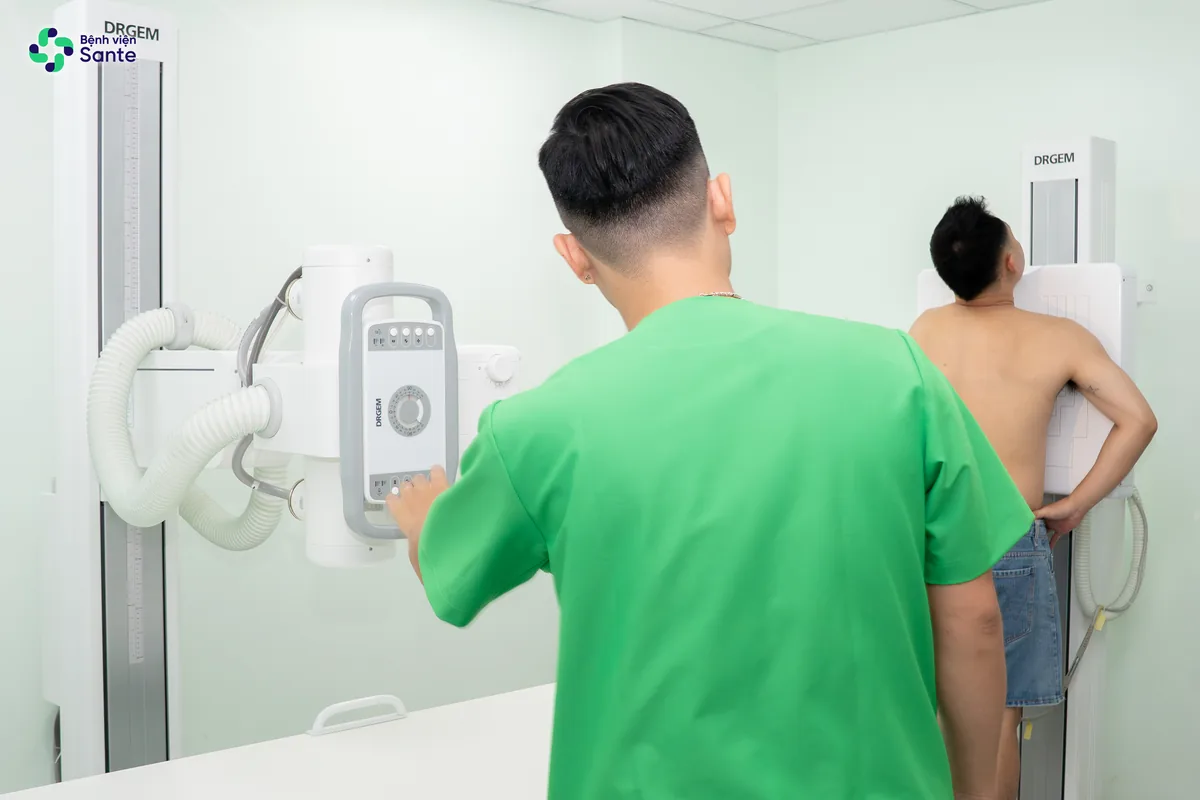
- Digital Chest X-ray (CXR): Cardiopulmonary assessment to detect infiltrates, lung nodules, tuberculosis, or pleural lesions early.
- Comprehensive Abdominal Ultrasound: Evaluating anatomical morphology of the liver, gallbladder, pancreas, spleen, kidneys, bladder, and prostate (in men) or uterus and ovaries (in women).
- 12-Lead Electrocardiogram (ECG): Recording cardiac electrical activity to detect arrhythmias, myocardial ischemia, or ventricular hypertrophy.
- Additional Investigations by Clinical Indication: Thyroid ultrasound, breast ultrasound (for women), gastrointestinal endoscopy, or CT/MRI when the physician identifies cardiovascular risks or suspects deep-seated lesions.
Video: Bác sĩ chuyên khoa giải đáp các phương pháp nội soi tiêu hóa êm dịu không đau tại SANTE (Nguồn: Bệnh Viện SANTE)
Video: Quy trình đo mật độ xương tầm soát loãng xương bằng hệ thống DEXA chuẩn quốc tế (Nguồn: Bệnh Viện SANTE)
4. Result Consultation and Health Management Planning
Once all clinical, laboratory, and imaging results are consolidated, your physician conducts a dedicated 1-on-1 consultation:
- Explaining the precise clinical significance of each test metric and imaging finding.
- Synthesizing a comprehensive picture of current wellness and identifying key risk flags.
- Providing actionable guidance on tailored nutrition, physical activity, and restorative rest.
- Formulating periodic follow-up plans or referring to specialized departments if early medical intervention is warranted.
Summary Table of General Health Screening Panels by Age & Risk Group
To help you clearly visualize recommended examinations across different life stages, SANTE Hospital provides the categorization below:
| Target Group | Recommended Frequency | Key Focus Areas |
|---|---|---|
| Young Adults (18 – 35 years old) | Every 1 – 2 years | General examination, baseline blood panel, fasting glucose, liver enzymes, lipid profile, renal function, digital chest X-ray. |
| Middle-Aged Adults (35 – 50 years old) | Annually (Once a year) | Cardiovascular risk profiling (ECG, echocardiography), abdominal ultrasound, early cancer screening (digestive, liver, cervical/breast in women). |
| Seniors (≥ 50 years old) | Every 6 months – 1 year | Vascular atherosclerosis screening, bone mineral densitometry (DEXA), periodic endoscopy, advanced renal & glucose profiles, chronic disease monitoring. |
| High-Risk Individuals | Per Physician's Guidance | Those with family history of cardiovascular disease, malignancy, or metabolic disorders: specialized monitoring per subspecialty. |
Who Should Undergo General Screening and at What Frequency?
General health screening is not merely for the symptomatic, but a proactive health maintenance habit for everyone:
- Apparently Healthy Individuals: Establishes baseline biological parameters, serving as an accurate comparative benchmark for subsequent years.
- Individuals with Risk Factors or Chronic Conditions: Those with relatives affected by diabetes, cardiovascular diseases, hypertension, cancer, or individuals who smoke, consume alcohol, experience chronic stress, or lead sedentary lifestyles.
- Individuals Entering New Life Stages: Premarital check, pregnancy preparation, workplace transition, or surpassing the milestone of 40–50 years.
Important Medical Note: If you experience acute red-flag symptoms such as chest tightness, dyspnea, syncope, hematemesis, unexplained weight loss, or acute focal neurological signs (limb weakness, facial droop), seek emergency medical care immediately rather than awaiting scheduled routine check-ups.
Essential Preparations Before Your Health Screening
To ensure laboratory and clinical findings achieve maximum diagnostic reliability, please adhere to the following preparatory instructions:
- Fasting Before Morning Blood Draw: Fast for 6 to 8 hours prior to blood sampling for blood glucose, lipid profile, and liver function panels. Small sips of pure plain water are permitted.
- Avoid Stimulants: Refrain from alcohol, beer, coffee, carbonated sodas, and tobacco smoking for 24 hours prior to check-up to prevent distortion of heart rate, blood pressure, and hepatic enzymes.
- Hydration and Bladder Filling: If prescribed abdominal or pelvic ultrasound, drink water and hold urine for approximately 1 hour beforehand to distend the bladder, optimizing acoustic transmission and imaging clarity.
- Chronic Medication Protocols: Patients taking daily antihypertensive or cardiac medications may typically take their morning dose with a small sip of water per doctor's orders. Diabetes medications or insulin injections should be temporarily withheld and administered immediately after fasting blood collection.
- Bring Medical Records: Current prescriptions, previous laboratory results, radiographic films, or clinical discharge summaries to provide longitudinal comparative context for your physician.
- Comfortable Attire: Wear loose-fitting, comfortable clothing that facilitates blood pressure measurement, physical examination, and ECG electrode placement.
Does a General Health Screening Detect Every Disease?
A general health screening is an exceptionally effective frontline screening modality, yet it cannot identify 100% of all human illnesses. Certain microscopic-stage pathologies or organ-specific lesions necessitate specialized interventions (such as tissue biopsy, genetic sequencing, or advanced targeted endoscopy).
The premier value of routine screening lies in unmasking prevalent silent conditions (hypertension, prediabetes, dyslipidemia, fatty liver, pulmonary infiltrates, thyroid nodules) and pinpointing individuals who require targeted tertiary diagnostics, enabling prompt intervention with minimal expenditure and optimal clinical outcomes.
Frequently Asked Questions About General Health Screening (FAQ)
1. How Long Does a General Health Screening Take?
At SANTE Hospital, the general check-up pathway is streamlined to conclude within 2.5 to 3.5 hours. Laboratory and imaging findings are delivered expeditiously on the same day, allowing same-session physician consultation without multi-day delays.
2. Does Health Screening Require Complete Fasting from Food and Water?
You must fast for at least 6 to 8 hours prior to venipuncture to ensure precision for blood glucose, liver enzymes, and lipid measurements. Moderate amounts of pure water are acceptable, but strictly avoid milk, sodas, tea, coffee, or fruit juices.
3. What Sets Health Screening at SANTE Hospital Apart?
SANTE Hospital champions personalized healthcare: our physicians personally evaluate individual medical history and risk factors before ordering tests, never forcing standardized bulk packages. Evidence-based, clinically indicated examinations maximize protective clinical outcomes while eliminating wasteful spending for patients.
4. How Often Should You Schedule a Health Check-up?
For healthy individuals under 35, the recommended cadence is every 1 to 2 years. Those aged 35 and above, or individuals with chronic conditions or elevated lifestyle risks, should maintain annual or biannual check-ups as scheduled by their physician.
Proactively Safeguard Your Health with SANTE Specialists
Book your appointment today at the Department of Outpatient & General Internal Medicine, SANTE Hospital, for direct examination and personalized, evidence-based check-up guidance from experienced clinicians.
